Make Odor Prevention
Part of the Daily Routine
Nano slow-release odor control devices support rooms where odors return after cleaning and ventilation, working alongside cleaning, airflow and humidity management.
Daily Prevention Applications

Hotels / GuesthousesPrioritize low-floor, external-wall and vacant rooms. During turnover cleaning, inspect damp linen, windows, walls, bathrooms and supply-air vents.

Pet FacilitiesFocus on boarding, activity and resting areas. Combine prompt cleaning and ventilation with device placement according to product instructions.

BasementsFocus on storage rooms, corners and weakly ventilated areas, alongside airflow and humidity management.
Device Placement & Daily Maintenance

Start with Recurrence-prone Rooms or Zones
Begin with one damp-prone guestroom, one boarding area or one poorly ventilated basement zone.
Record device placement, cleaning and ventilation times, and when odors usually occur as a reference for later inspections.
Include Device Checks in Cleaning Routines
Label devices by room number or location. Log odor points, device condition and consumable levels, replenishing according to product instructions.
Recheck recurrence-prone points along the same route after rain, vacancy or closing. Record unresolved issues in shift handovers.

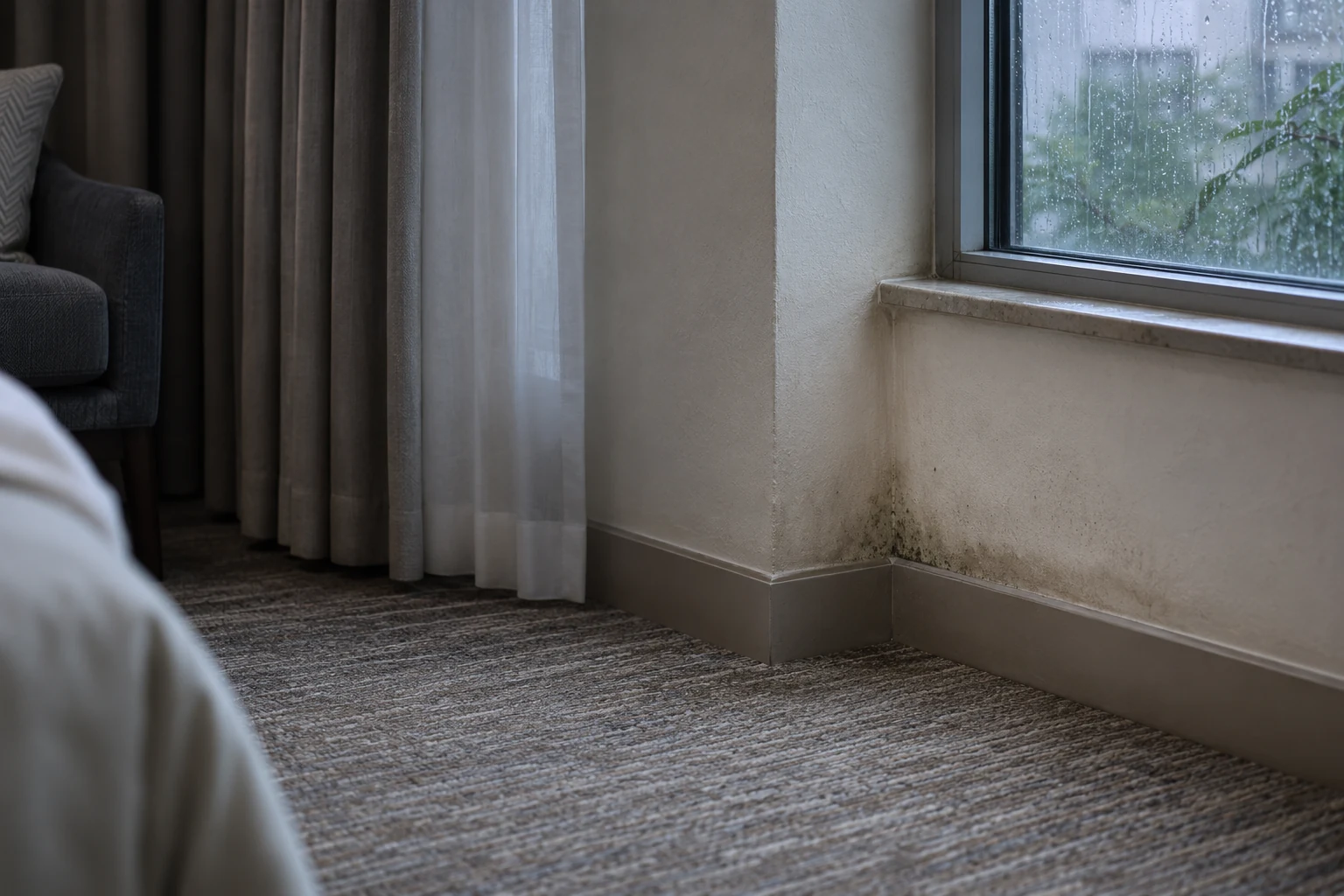
Escalate Strong Mustiness to On-site Assessment
If a room has noticeable mustiness or continuing dampness, identify moisture sources first, then arrange on-site treatment.
After guestroom treatment passes verification, include damp-prone rooms in daily prevention.
Handing Daily Maintenance to Housekeeping
After checkout, inspect windows, walls, linen and bathrooms using the room checklist. Complete cleaning and ventilation, then log recurrence points, device condition and consumable levels.
At handover, supervisors train teams to inspect points, keep records and replenish consumables. Report leaks and drainage faults to engineering; escalate repeated strong mustiness for site assessment. Maintenance visits review device condition, consumable levels and recurring odor points.

More Services & Applications
On-site Odor TreatmentInspect moisture sources and odor-retaining materials on site, then treat and verify each zone.

Musty Odor Decomposition IngredientsIngredient supply, sampling, trial orders and product development.
Damp & Musty BasementsInspect moisture and ventilation, then plan zoned treatment.
Discuss Device Placement
Share the setting, location layout and expected device quantity.
