Stop Recurring Odors.
Reduce Room Changes.

Mustiness on entry, odors when the air conditioning starts, or complaints after rain. LANGKUI checks moisture and odor sources room by room, schedules treatment around room availability, and verifies each room before handover.
Where Guestroom Odors Begin
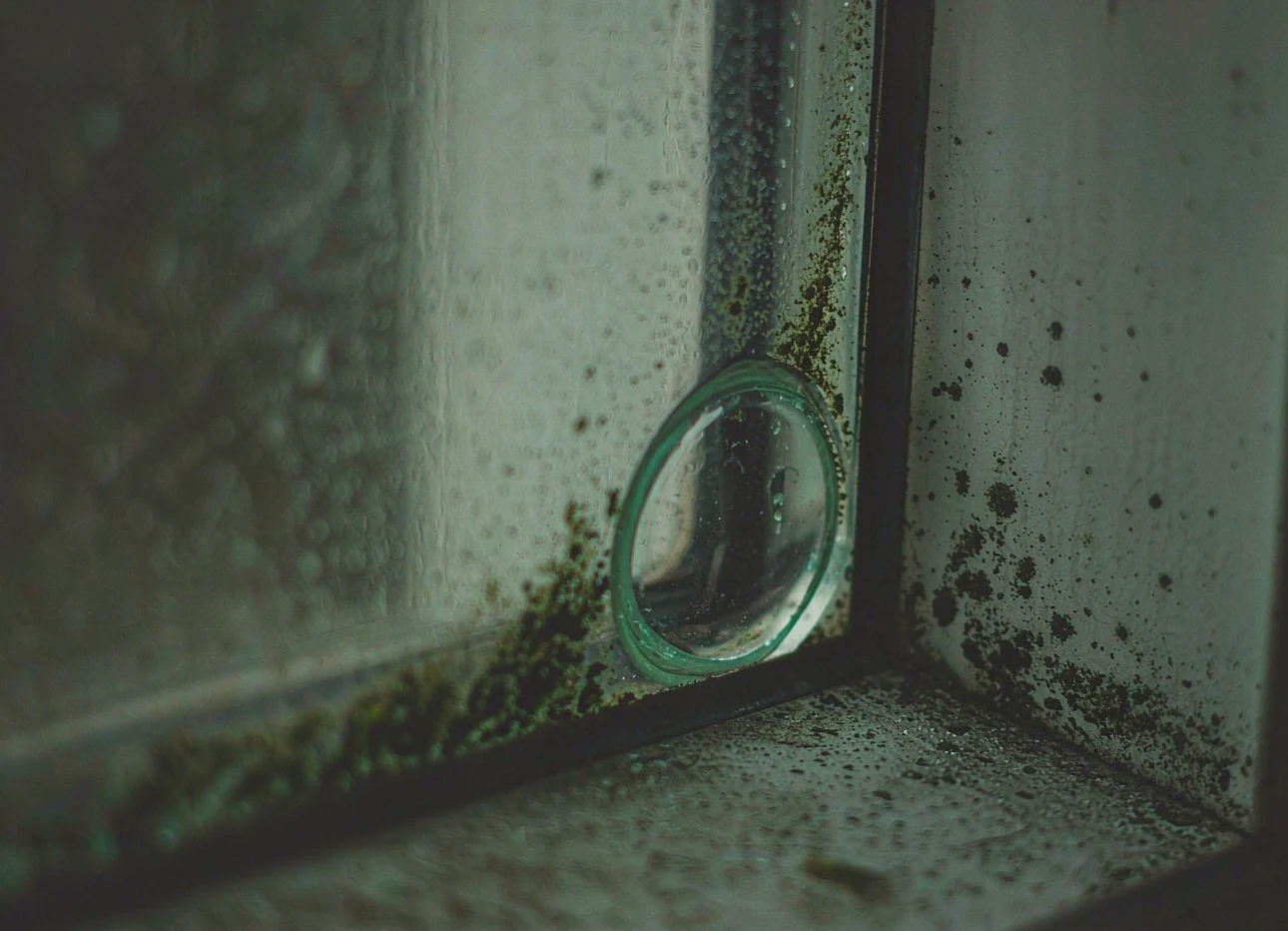
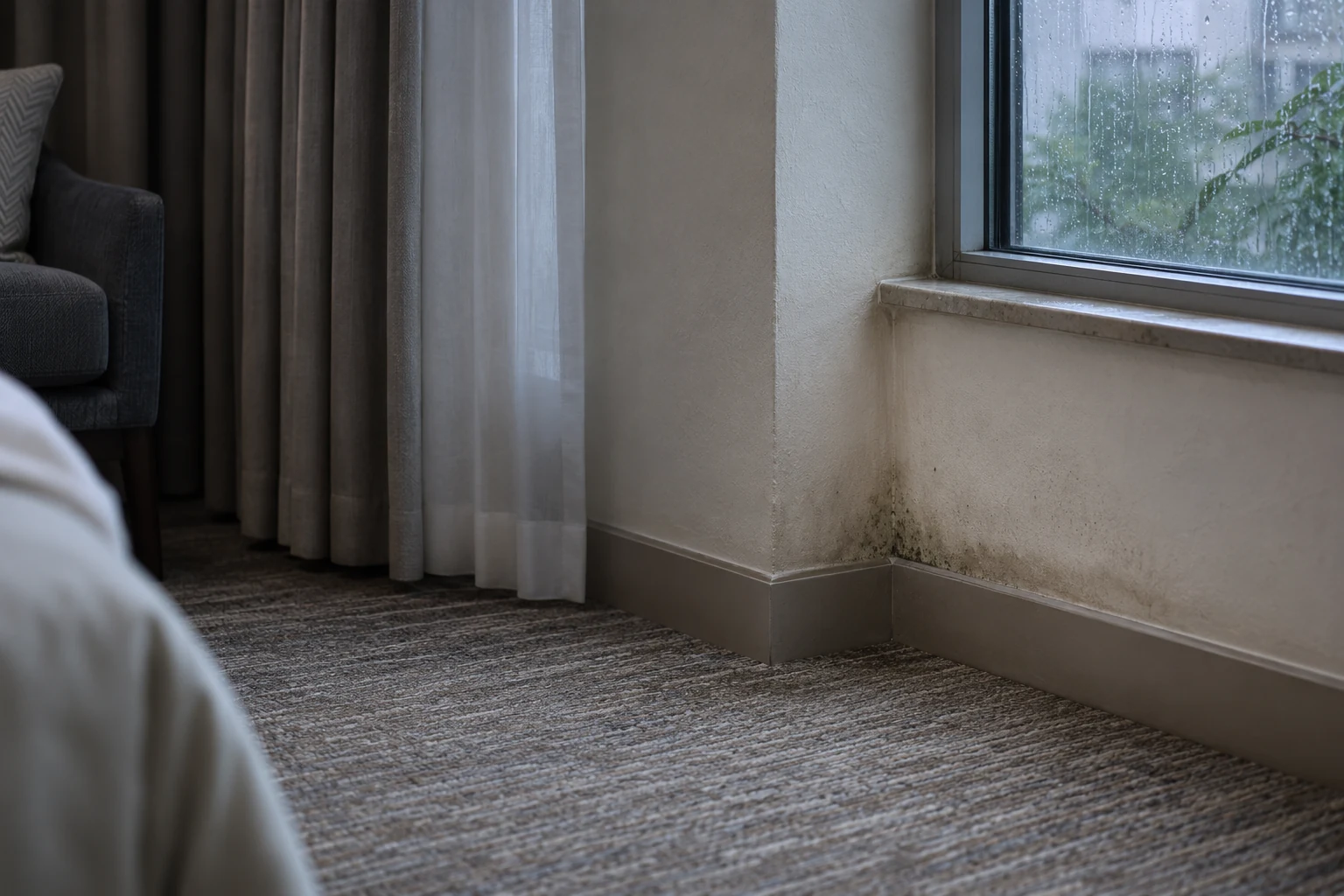
Condensation and mold marks around a guestroom window, illustration
Damp Windows & Walls After RainWhen odors worsen at windows or wall bases after rain, check window-frame leaks, water marks and condensation. Repair leaks or control humidity first, then dry the affected areas thoroughly.
Guestroom site inspection, illustration
HVAC Mustiness & Bathroom Drain OdorsFor musty supply air, inspect filters, coils, drain pans and condensate drainage. If odors center on the bathroom, check floor-drain water seals, drainage and exhaust ventilation.
Guestroom bedding and fabrics, illustration
Odors Retained in Linen & FurnishingsIf odors intensify near bedding, curtains or carpets, wash the linen and deep-clean and dry the furnishings. Arrange replacement of mold-damaged materials that cannot be restored by cleaning.

Which Rooms Need On-site Treatment?

Housekeeping completes routine cleaning while engineering resolves repair issues. Follow-up findings determine whether targeted odor treatment is needed.

Odors Clear After Cleaning

After checkout, remove odor-causing items, wash linen and ventilate. Close the room and recheck. If odors do not return, hand it over through the hotel's normal process.

Odors Return After Cleaning

If noticeable mustiness returns on entry, when the air conditioning starts or after rain, arrange an on-site assessment. Address moisture sources and faults before treating residual odors.

Active Leaks or Extensive Mold Damage

Take the room out of service. Engineering stops the leak and organizes drying. Qualified specialists address mold and damaged materials before residual odor treatment is scheduled.

A Room-by-room Treatment Plan
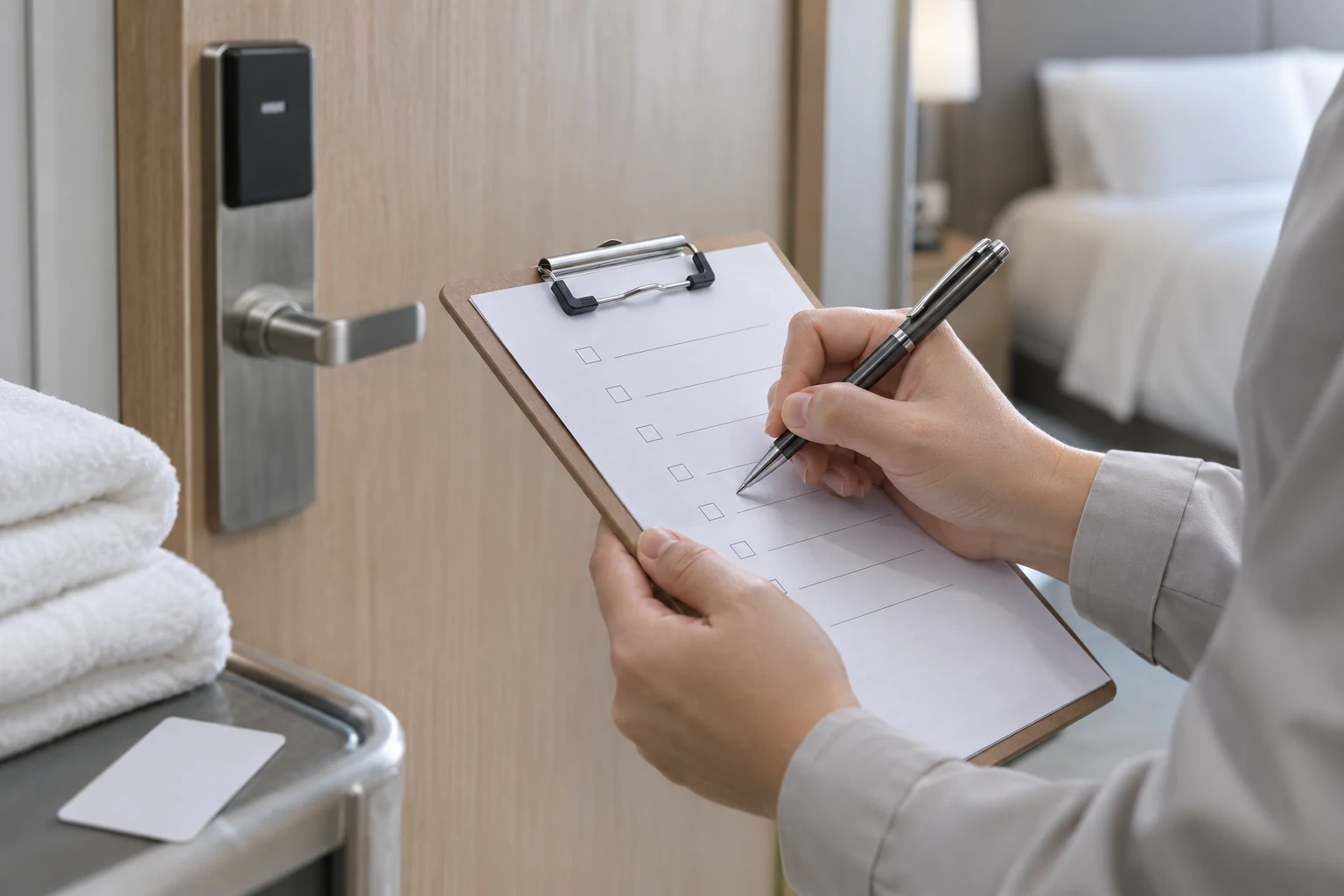
Staff recording guestroom inspection findings

01 Identify the Odor Source

Front office compiles complaints and room-change records, including room numbers, strongest odor points and timing. Inspect repeatedly reported rooms first, then compare similar rooms on the same floor.
Record first-entry odors before ventilation. Inspect windows, walls, HVAC, bathrooms and furnishings by zone. Where adjacent rooms are affected, investigate shared exhaust and drainage with engineering.

02 Address the Source, Then Treat in Batches

Front office reserves vacant rooms around arrivals and departures. Engineering repairs leaks, drainage and equipment faults while housekeeping cleans, launders and dries materials. Odor treatment follows source remediation.

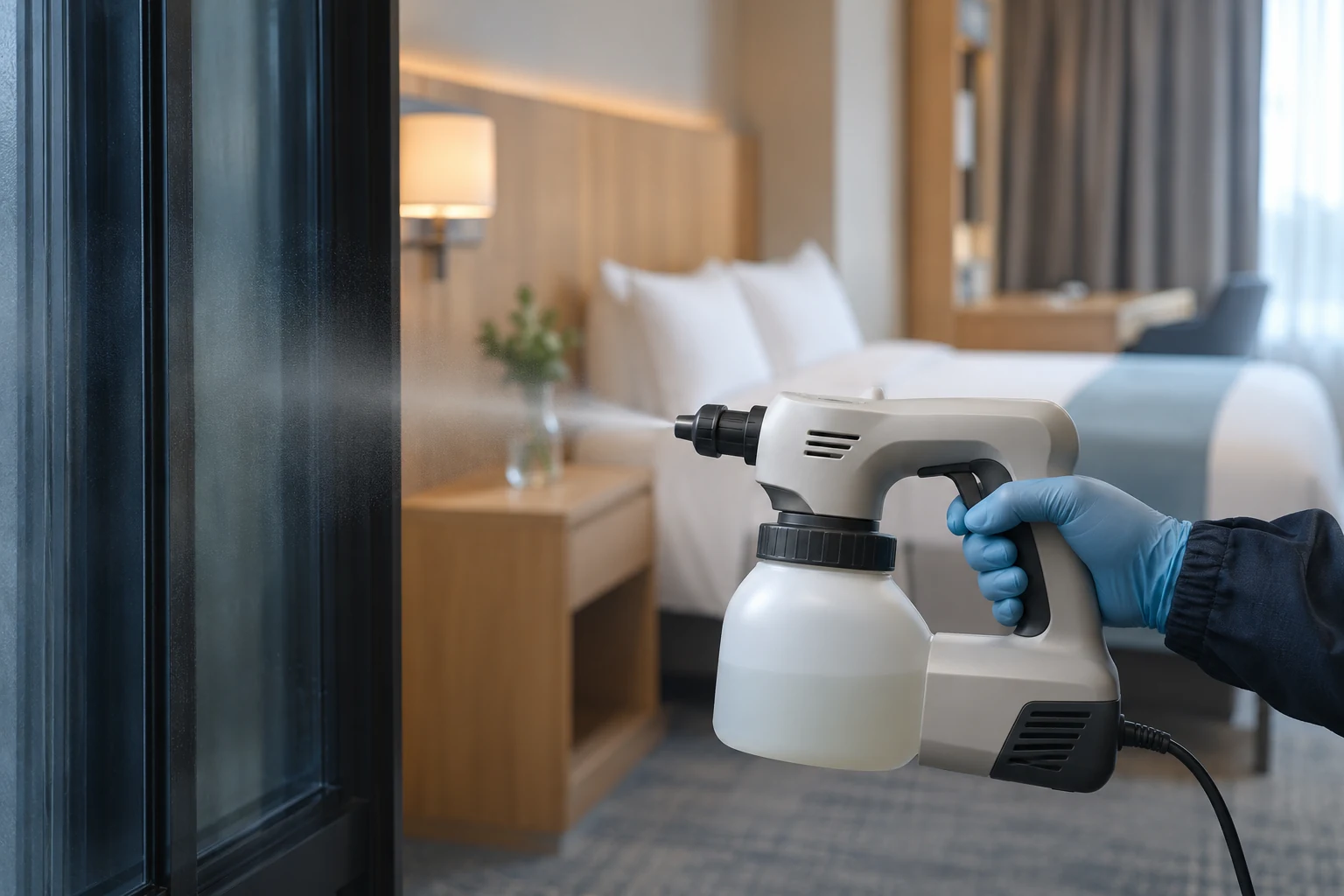
Guangzhou Guangwei Environmental Technology Co., Ltd. provides on-site treatment. Depending on the location and extent of residual odors, treatment uses targeted application or nano atomization in vacant rooms. Ventilate according to product instructions, meet re-entry requirements, then inspect again.

Odor treatment in a vacant room, illustration
A cleaned and prepared hotel room

03 Verify Under Guest-use Conditions, Then Hand Over

After ventilation, check first-entry odors following a closed-door period. Where the HVAC is operating normally, use guest settings and recheck vents, bathrooms and original odor points.

Rooms with resolved moisture sources, dry affected materials and no noticeable odors on verification go to the housekeeping supervisor before front office returns them to sale. Keep rooms with recurring odors out of service and revisit the original source points.

What the Hotel Receives at Handover

A room-number checklist shows front office which rooms can return to sale and tells engineering and housekeeping which points still need attention.

Odor Assessment Records

List odor locations, triggers and findings in each room, with specific engineering repairs and housekeeping tasks.

Treatment Records

Record what was done in each room, when treatment took place and when ventilation finished, helping front office schedule checks and room allocation.

Handover & Outstanding Tasks

List rooms handed back and those still out of service, outstanding work, and points to revisit after rain or a vacancy.

Build Recurrence Checks into Turnover Cleaning

After rain or a long vacancy, prioritize windows, walls, floor drains and air conditioning. Once cleaning and humidity control are in place, nano slow-release devices can support daily maintenance at odor-prone points.

Explore daily guestroom prevention ↗
Illustrative Scenario · Low-floor Room Odors After Rain
Several rooms on one floor develop mustiness after rain. Where odors are strongest by windows, inspect frame leaks and damp wall bases. Where odors begin only with HVAC operation, check drain pans and condensate drainage. Engineering addresses the different faults by room number.
Housekeeping cleans and dries affected areas, and Guangwei treats residual odors in batches. Rooms are verified and handed back individually. After the next rain, housekeeping revisits source points while front office checks for further odor complaints or room changes.
Dampness at the base of a low-floor guestroom wall, illustration
More Services & Applications
Nano Slow-release Odor Control Device, illustration
Nano Slow-release Odor Control DeviceDaily odor maintenance for hotels, guesthouses, pet facilities and basements.
Musty Odor Decomposition Ingredients, illustration
Musty Odor Decomposition IngredientsIngredient supply, sampling, trial orders and product development.
Damp & Musty Basements, illustration
Damp & Musty BasementsInspect moisture and ventilation, then plan zoned treatment.
On-site Odor Treatment, illustration

Arrange a Guestroom Assessment

On-site treatment starts from 5 guestrooms. Share the hotel location, affected room count, odor timing and available out-of-service periods.
Discuss your hotel project